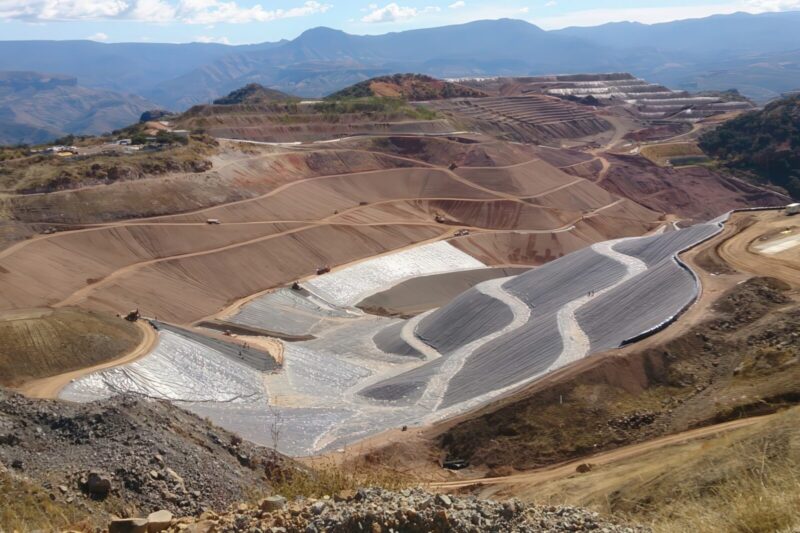
Geomembranes are critical components in landfills, mining facilities, wastewater ponds, reservoirs, and other containment projects. Their performance depends on properties such as thickness, strength, flexibility, durability, and resistance to environmental exposure.
Material laboratory testing provides objective evidence that supplied geomembranes meet the project specifications and relevant industry standards. By identifying non-conforming materials before installation, testing can reduce the risk of leakage, premature deterioration, expensive repairs, and project delays.
Confirming the Physical Properties of Geomembranes

Laboratory testing often begins with basic physical properties, including thickness, density, mass per unit area, and dimensional stability. These characteristics help confirm that the delivered material is consistent with the product specified by the designer.
Thickness is especially important because it can influence puncture resistance, tensile performance, and long-term durability. Measurements are taken at multiple points across representative samples to determine whether the material falls within the permitted range.
Specialist geosynthetic testing services can perform the required examinations using controlled procedures and calibrated equipment; read more about the available tests before selecting a laboratory for a particular project. The chosen facility should understand the applicable material type, specification, and testing standard.
Testing may also identify variations between production rolls or batches. Detecting these differences before installation allows the project team to investigate whether the material should be accepted, subjected to further testing, or rejected.
Evaluating Mechanical Strength and Durability

Geomembranes must withstand stresses created during transportation, installation, covering, settlement, and operation. Laboratory tests can evaluate tensile strength, elongation, tear resistance, puncture resistance, and other mechanical properties related to field performance.
Tensile testing measures how the material responds when pulled and how far it can stretch before breaking. Puncture and tear tests assess its ability to resist damage from construction equipment, aggregate, uneven subgrades, and other sources of concentrated stress.
Depending on the polymer and project requirements, laboratories may also examine environmental stress cracking, oxidation resistance, carbon black content, dispersion, or resistance to chemical exposure. These tests help assess whether the geomembrane is likely to retain its essential properties throughout its intended service life.
No single laboratory result can represent every field condition. Engineers should evaluate the complete set of results alongside the design assumptions, installation environment, chemical exposure, temperature, loading, and expected duration of use.
Conclusion
Material laboratory testing confirms whether geomembranes possess the physical, mechanical, and durability properties required for a containment project. It provides independent data that supports informed material acceptance decisions.
When testing is planned correctly and samples remain traceable, non-conforming products can be identified before installation. This protects construction schedules, reduces long-term risk, and helps ensure that the completed containment system performs as intended.